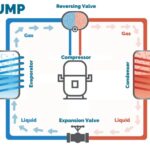


Every dairy factory needs two things all day long: cooling to keep milk fresh, and heating to clean machines, pasteurize milk and to process products like Paneer, Curd, etc.
In most dairy factories, cooling machines throw waste heat out into the air. At the same time, big boilers burn coal, oil, wood, or gas to make steam. This wastes a lot of energy and creates pollution.
In 2018, a dairy company called TINE built a new factory in Bergen, Norway, and solved this problem. They built a modern dairy plant that runs without any fossil-fuel boilers. Instead, it uses electric heat pumps and hot water storage tanks for their heating and cooling requirements.
About the TINE Bergen Dairy Plant
This is not a small test factory. It is a large, busy dairy plant:
Factory size: 20,000 square meters
Production: Over 43 million liters of milk and dairy products every year
Clean power: 6,000 square meters of solar panels on the roof
Award: Won the 2019 “Heat Pump City of the Year” award in Europe
How the Heat Pump System Works (In 3 Simple Steps)
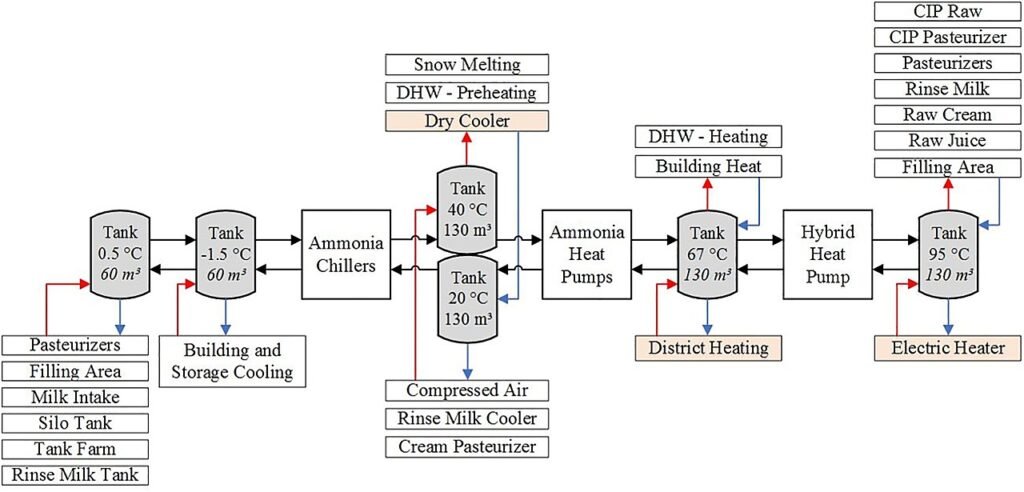
Instead of throwing away heat from the cooling machines, the factory catches that heat and pushes the temperature higher in three steps.
Step 1: Cooling the milk (Up to 40°C)Three ammonia cooling machines chill the milk and cold rooms down to 4°C and below. The heat pulled out of the milk is not wasted. It goes into a 40°C warm water tank.
Step 2: Making medium-hot water (Up to 67°C)Two ammonia heat pumps take the 40°C warm water and heat it up to 67°C. This water is stored in a second tank. It is used to warm the building and supply general hot water.
Step 3: Making high-temperature water (Up to 95°C)A special high-temperature heat pump (using a safe, natural mix of ammonia and water) takes heat from the 67°C tank and boosts it to 95°C. This hot water goes into a third tank and is used for milk pasteurization, cleaning pipes (CIP), and filling machines.
Why use storage tanks?
Dairy factories do not use the exact same amount of heat every minute. The big hot water tanks act like heat batteries. They store extra heat when demand is low and give it back when demand is high. This lets the heat pumps run smoothly all day.
The Results: Big Energy and Pollution Savings
Researchers in Norway studied the factory’s real daily data during a cold winter week. The results were impressive:
High efficiency: For every 1 unit of electricity used, the whole system gave 4.1 units of useful heating and cooling (an overall COP of 4.1). The top 95°C heat pump alone reached a score of 5.9.
Almost zero waste: The factory reused more than 95% of its own waste heat.
Lower energy bills: The plant cut its outside energy need by nearly 38% compared to a normal boiler-and-chiller dairy.
Much cleaner air: Depending on the local power source, this setup cuts carbon pollution by up to 91.7%.
Safe for the planet: The system uses only natural refrigerants (ammonia and water), which do not harm the ozone layer or cause global warming.
The Smart Trick Other Dairies Can Copy
One big secret behind TINE’s success was a simple design change.
Most old dairy factories use 120°C steam for everything, even when milk pasteurization and cleaning only need 75°C to 85°C. Making 120°C steam wastes a lot of energy.
TINE removed its steam pipes completely and redesigned the plant to run on 95°C hot water. Because the heat pumps did not have to push the temperature too high, they used much less electricity and worked much more efficiently.
The TINE Bergen factory proves that big food and dairy plants do not need to burn fuel to get hot water. By pairing cooling machines with electric heat pumps and hot water tanks, factories can save energy, cut costs, and run cleanly for decades.
Want to learn more about how electric heat pumps are changing factories around the world? Stay tuned to electricalheatpump.com for more real-world case studies and simple guides.